Last week, I was able to attend the Clinical Trial Oversight Summit, in Boston, Massachusetts. This is the first in a couple of blog posts on Patient Profiles time at conference. One of the tracks for the first two-days of the conference was Mastering Clinical Trial Monitoring. It was two whole days of discussion on Risk-Based Monitoring.
On the opening day, during the presentation of “The Brave New World of Risk-Based Monitoring” given by Susan Bosworth-Farrell from Abbott Vascular, a poll was conducted of those in attendance and how many were still doing 100% SDV. Of those in attendance, 22% were still doing 100% SDV for their clinical trials. This group was primarily made up of CRAs. So why aren’t they? An additional poll of the group showed that 53% of those in attendance were still unsure whether or not RBM has had any effect on Study Data Quality. How can this be?
It sends a clear message that for most sponsors and CROs still lack the tools to be able to qualify and quantify the impact of risk-based monitoring to the quality of the data. How can you assure management, let alone the FDA, that you have sufficiently monitored the data if there are no clear metrics to show the quality of the data?
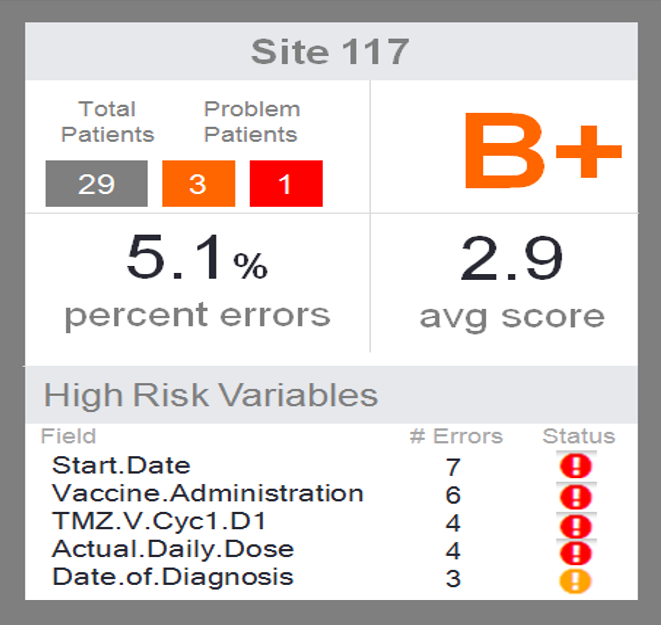
This underscores the unique difference Patient Profiles’ QueryMap solution has to offer industry. QueryMap provides ongoing snapshots of the discrepancies identified in the study data and allows clinical operation teams to easily track, identify, and report changes in the quality of the data itself. Its easy to understand letter grading algorithm, assures clinical operation teams, sponsors, management, and the FDA that the monitoring of the study is impacting the overall study data quality.